

What Is a Semi-Electric Hospital Bed? Cost, Size, and Uses
By the SlumberSource team. Published: October 2026.
If you are caring for someone at home, you have probably seen the term hospital bed semi electric and wondered what it actually means. The short version: it is a hospital bed where a motor raises and lowers the head and foot sections, but the bed height is cranked by hand.
That difference matters. A semi-electric hospital bed costs less than a full-electric model, often by several hundred dollars, and it works well when the person in bed needs help with positioning, not constant height changes. The tradeoff is that caregivers must turn a hand crank to raise or lower the whole bed, which is hard on the back during daily care. Most standard models measure about 36 inches wide by 80 inches long, which fits a typical bedroom.
Below, you will find a plain explanation of how these beds work, how they compare with full-electric and Hi-Low designs, what they cost, and the exact dimensions to measure for. We also cover who benefits most, so you can decide whether a semi-electric hospital bed for home fits your situation or whether you should step up to more features.
Why a semi-electric hospital bed matters for home care
Most families do not need every feature a hospital bed offers. What you need is safe positioning and a price that fits your budget. A hospital bed semi electric design delivers that by letting the person in bed change posture without being lifted or dragged by a caregiver.
What the motorized sections do
Raising the head section takes pressure off the lower back and makes eating, reading, and taking medication easier. Lifting the knee section also keeps the person from sliding toward the foot of the bed. Both adjustments run on a hand control, so the person in bed can often make them alone.
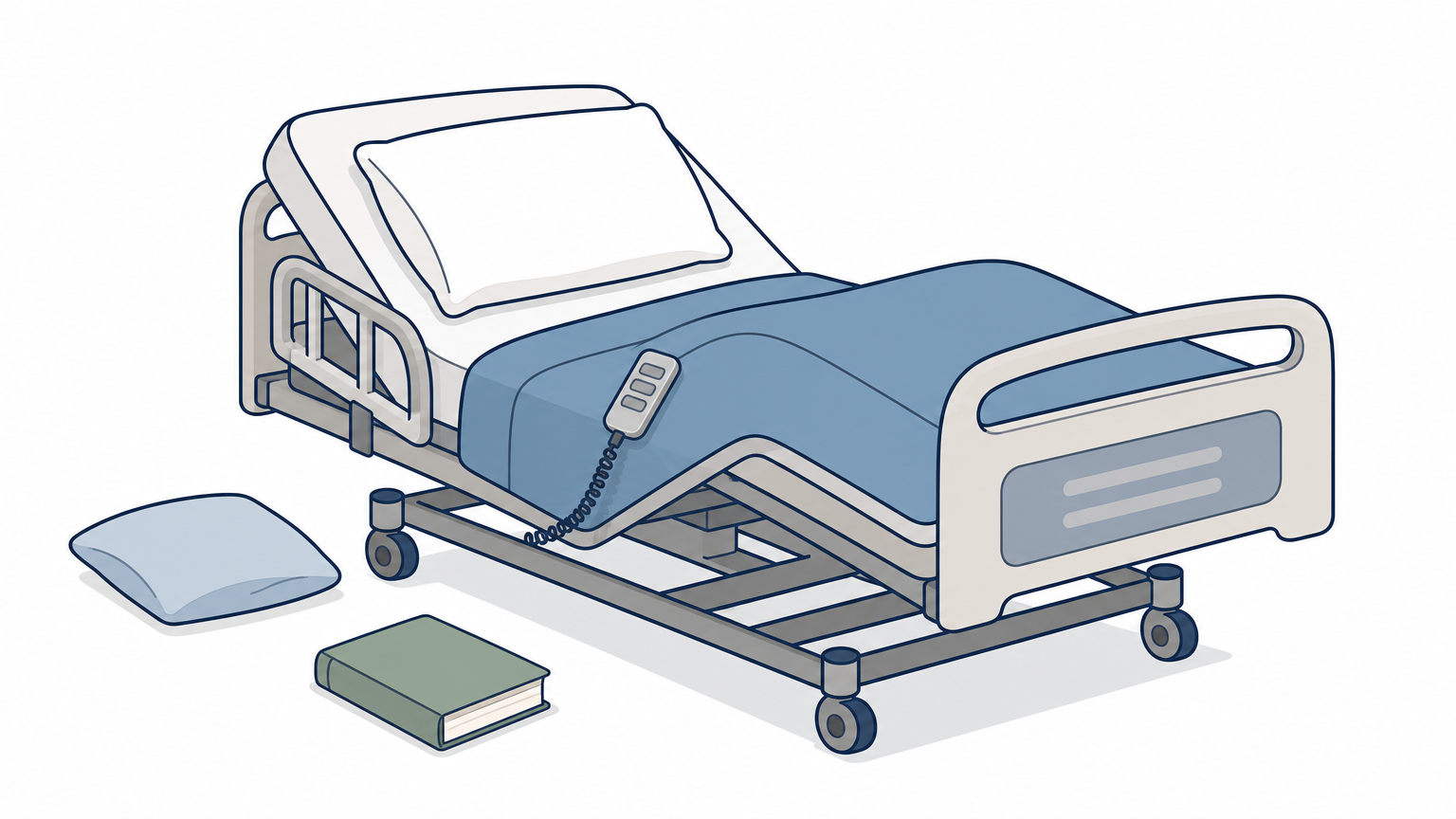
- Meals and pills: head up to a comfortable sitting angle
- Reflux and breathing comfort: head raised, often 30 degrees or more
- Swelling in the legs: foot section elevated
- Dressing and skin checks: bed flat, with the knees bent for comfort
Where the manual crank fits
The crank sets the height of the whole bed. You raise it to waist level for linen changes and dressing, then lower it so the person can sit on the edge and stand with feet flat on the floor. Most households make that change only a few times a day.
A semi-electric bed motorizes the adjustments you make all day and leaves manual only the one you make least.
Because the crank needs no power, it also keeps working during an outage. That said, a caregiver with back or shoulder problems should think twice. Cranking a bed up and down many times daily adds up, and a full-electric model may be the better choice in that case.
How to choose a semi-electric hospital bed for your home
Start with the person in the bed, not the spec sheet. Their transfer ability and daily routine decide whether a hospital bed semi electric model is enough, or whether you need more features.
Match the bed to the user
Check weight capacity first. Standard frames hold about 350 pounds, and bariatric frames go higher. Then watch how the person gets out of bed. If they stand with help, the lowest bed height matters most, so look for a frame that drops to roughly 15 to 20 inches.
Choose the bed for the transfer, not for the feature list.
Confirm the details that affect daily use
Before you order, run through this short list:
- Side rails: half rails help with turning, while full rails can raise entrapment risk
- Hand control: large, clearly labeled buttons for weak or arthritic hands
- Casters: locking wheels for cleaning and moving the bed
- Mattress: foam or pressure-relief, sized to fit the frame
Finally, read customer reviews before you buy. They reveal noise levels and crank smoothness, two details that rarely appear in a product description but shape every caregiving day.
Semi-electric vs. full-electric: which one fits your needs
The core difference
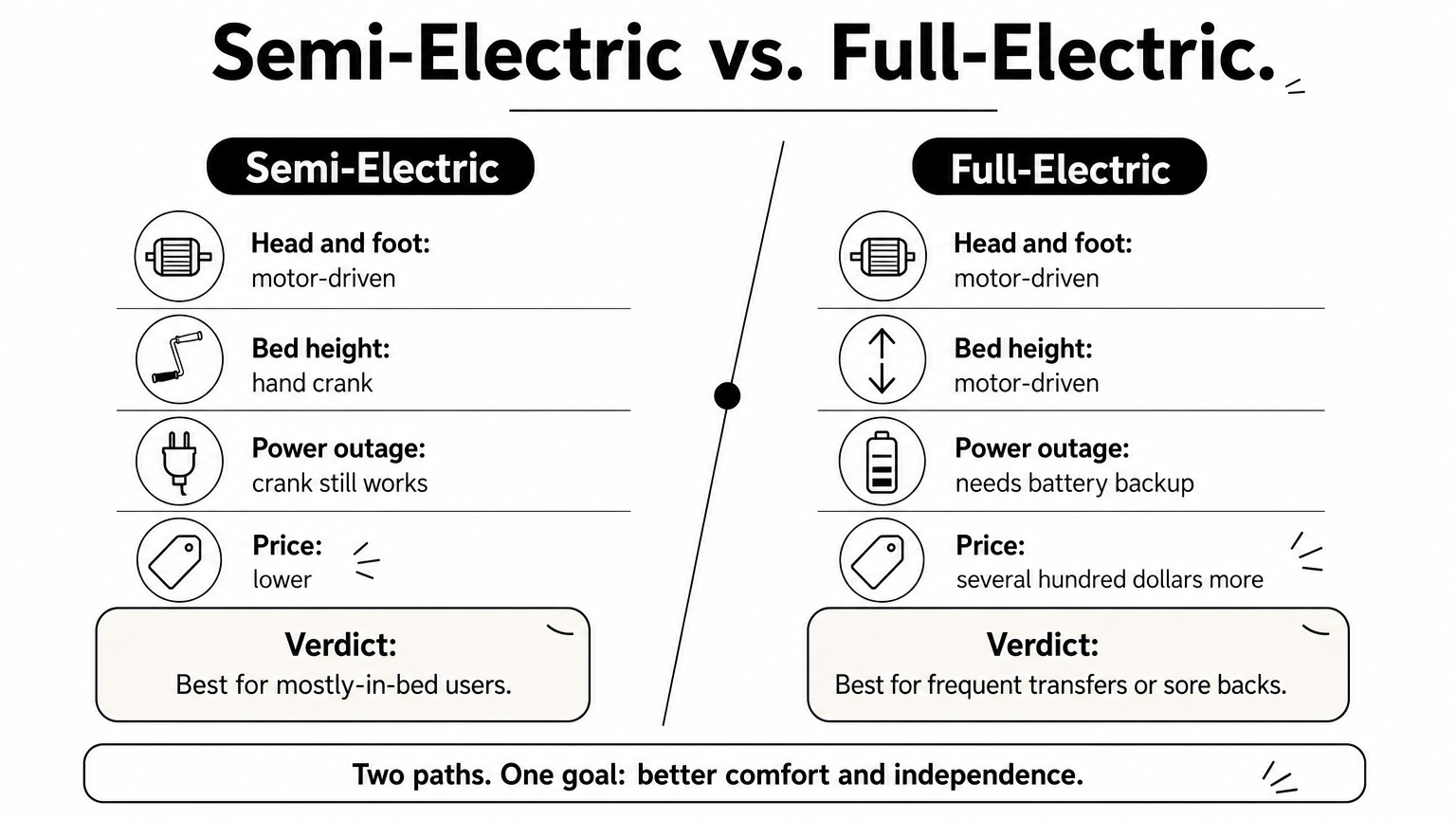
The only real split is bed height. A semi-electric bed motorizes the head and foot sections, while a full-electric bed also raises and lowers the whole frame from the hand control. Expect full-electric models to cost several hundred dollars more.
| Feature | Semi-electric | Full-electric |
|---|---|---|
| Head and foot | Motor | Motor |
| Bed height | Hand crank | Motor |
| Power outage | Crank still works | Needs battery backup |
| Price | Lower | Higher |
When to pay for the full-electric motor
Choose full-electric if the person stands or transfers often, since they can set their own height. It also suits a caregiver with back or shoulder pain, who should not crank a frame all day.
If the bed height changes more than a few times a day, pay for the motor.
Stay with semi-electric when the person spends most of the day in bed, or when height changes happen only at morning and evening care. In that case, the savings buy you the same positioning at a lower price.
Semi-electric hospital bed dimensions and room fit
Semi-electric hospital bed dimensions follow a few standard sizes. Most adult frames use a 36-inch by 80-inch mattress, and the full frame runs a few inches larger each way. Bariatric frames are wider and rated for more weight.
| Frame type | Mattress width | Length | Typical capacity |
|---|---|---|---|
| Standard | 35 to 36 in | 80 in | About 350 lb |
| Bariatric | 42 to 54 in | 80 to 84 in | 450 lb and up |
Check the room and the route
Before you order, measure the bedroom and leave about 3 feet of open space on the side where the caregiver works. That gives you room to turn the person, change linens, and use a lift if needed. Also confirm that an outlet sits within reach of the power cord.
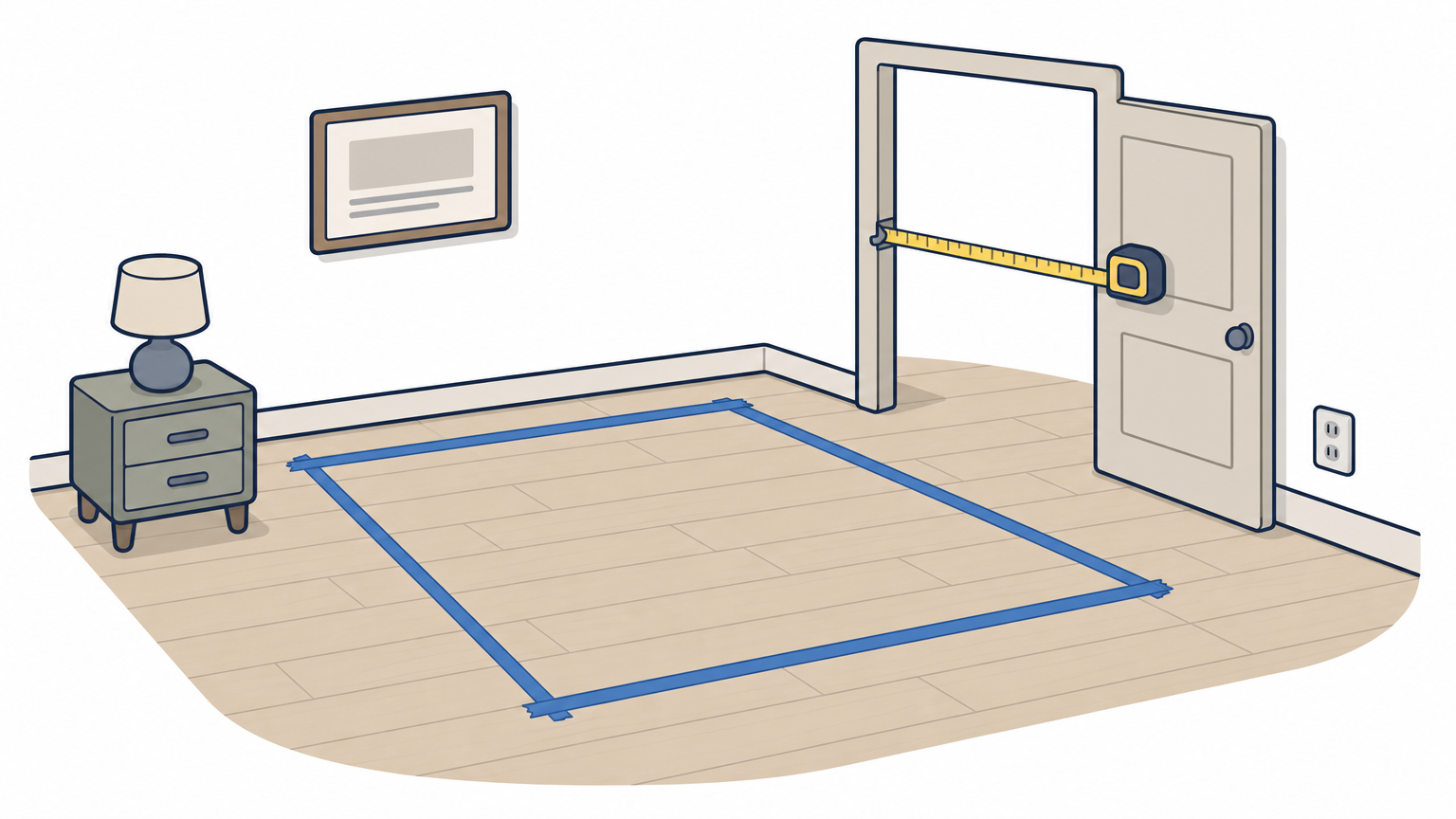
Measure the path to the bedroom, not only the bedroom itself.
Delivery is where many homes run into trouble. Tape out the bed footprint on the floor, then measure every doorway, hallway, and turn the frame must pass through. Most beds ship in sections, but narrow stairwells and tight corners still cause problems.
What a semi-electric hospital bed costs and Medicare coverage
What you can expect to pay
Hospital bed prices vary by brand and build. A basic semi-electric frame commonly runs $800 to $2,000, and a full-electric model adds several hundred dollars on top. Before you compare totals, check what each price includes:
- Mattress, which is often sold separately
- Side rails and assist handles
- Delivery and setup
How Medicare treats the purchase
Medicare Part B may cover a hospital bed as durable medical equipment when a doctor orders it for a documented medical need. You typically pay 20% coinsurance after the Part B deductible, and the supplier must be enrolled in Medicare. Details are on the Medicare.gov hospital bed page.
Get the doctor's order and confirm the supplier's Medicare status before you buy.
Coverage often stops at the semi-electric level. If you want a full-electric upgrade, expect to pay the difference yourself. Ask your plan whether the bed is rented or purchased, since many are rented first.
Choosing the right bed for your home
A hospital bed semi electric design gives you motorized head and foot positioning at a lower price, with a hand crank for height. It suits people who spend most of the day in bed and caregivers who can handle the crank. If the person transfers often, or the caregiver has a sore back, the full-electric motor is worth the extra cost.
Before you buy, confirm the basics we covered: weight capacity, lowest bed height, and the 36 by 80 inch footprint. Then measure every doorway on the delivery route. If you plan to bill Medicare, get the doctor's order first, and read customer reviews for noise and crank feel.
When you are ready to compare, browse the hospital and adjustable beds at Slumbersource. You will find clinical-grade and furniture-style options with nationwide delivery and installation in 3 to 8 days, so the right bed can be in place soon.


