

6 Best Hospital Bed Mattresses for Home Care in 2026
A hospital mattress bed setup only works as well as the mattress itself. You can buy the most advanced adjustable frame on the market, but if the mattress underneath is thin, sagging, or the wrong density for your loved one's needs, you're still fighting pressure sores, poor circulation, and restless nights.
This guide answers the question caregivers ask us most: which hospital bed mattress actually holds up at home, not just in a clinical brochure. We cover foam options built for pressure redistribution, models sized for standard frames, and picks specifically meant as a hospital bed mattress replacement when the original one that came with a used or hand-me-down bed has worn out or lost its support.
Below, you'll find six mattresses we consider the best for home care in 2026, chosen for comfort, durability, and how well they pair with adjustable frames. Whether you're outfitting a new bed or shopping for a replacement mattress for hospital bed use, you'll walk away knowing exactly which option fits your budget and your caregiving situation.
1. Standard foam hospital bed mattress
The standard foam hospital bed mattress is the baseline option you'll find on most new hospital beds and the one most people picture when they hear the term. It's a single-density block of foam, usually 4 to 6 inches thick, wrapped in a fluid-resistant, wipeable cover. Nothing fancy, but it does the core job: supporting the body evenly across a standard bed frame width (usually 36 or 42 inches, as our chart of frame widths and lengths shows) without the sagging you get from an old innerspring unit.
How it works
Unlike a traditional mattress, this foam hospital bed mattress uses a single layer of medium-density polyurethane foam engineered to flex with the bed's head and knee articulation. When you raise the head section 30 degrees for a meal or lower the knee break to ease pressure on the lower back, the foam bends with the frame instead of creating a gap or hard crease. The foam density typically falls in the 1.5 to 2.0 lb/cubic ft range, firm enough to support transfers but soft enough to reduce contact pressure compared to a bare frame.
A standard foam mattress won't prevent pressure injuries on its own, but paired with regular repositioning, it's a solid, affordable starting point for most home care setups.
Who it's for
Caregivers shopping for a hospital bed and mattress combo for someone who is mobile, low fall-risk, and doesn't yet have skin breakdown concerns will find this option sufficient. It suits recovery from surgery at home, short-term illness, or general mobility limitations where the person shifts position on their own throughout the day. If your loved one is bed-bound for extended stretches or already showing early pressure sore signs, skip ahead to the pressure redistribution option below.
Price range
Expect to pay between $150 and $400 for a quality standard foam mattress sized for a home hospital bed frame, with most landing near $250. Prices climb with thicker foam cores and higher-grade waterproof covers. At SlumberSource, our adjustable bed packages typically include a mattress matched to the frame's dimensions, so you're not left guessing on fit or firmware compatibility with the bed's motorized joints.
2. High-density pressure redistribution foam mattress
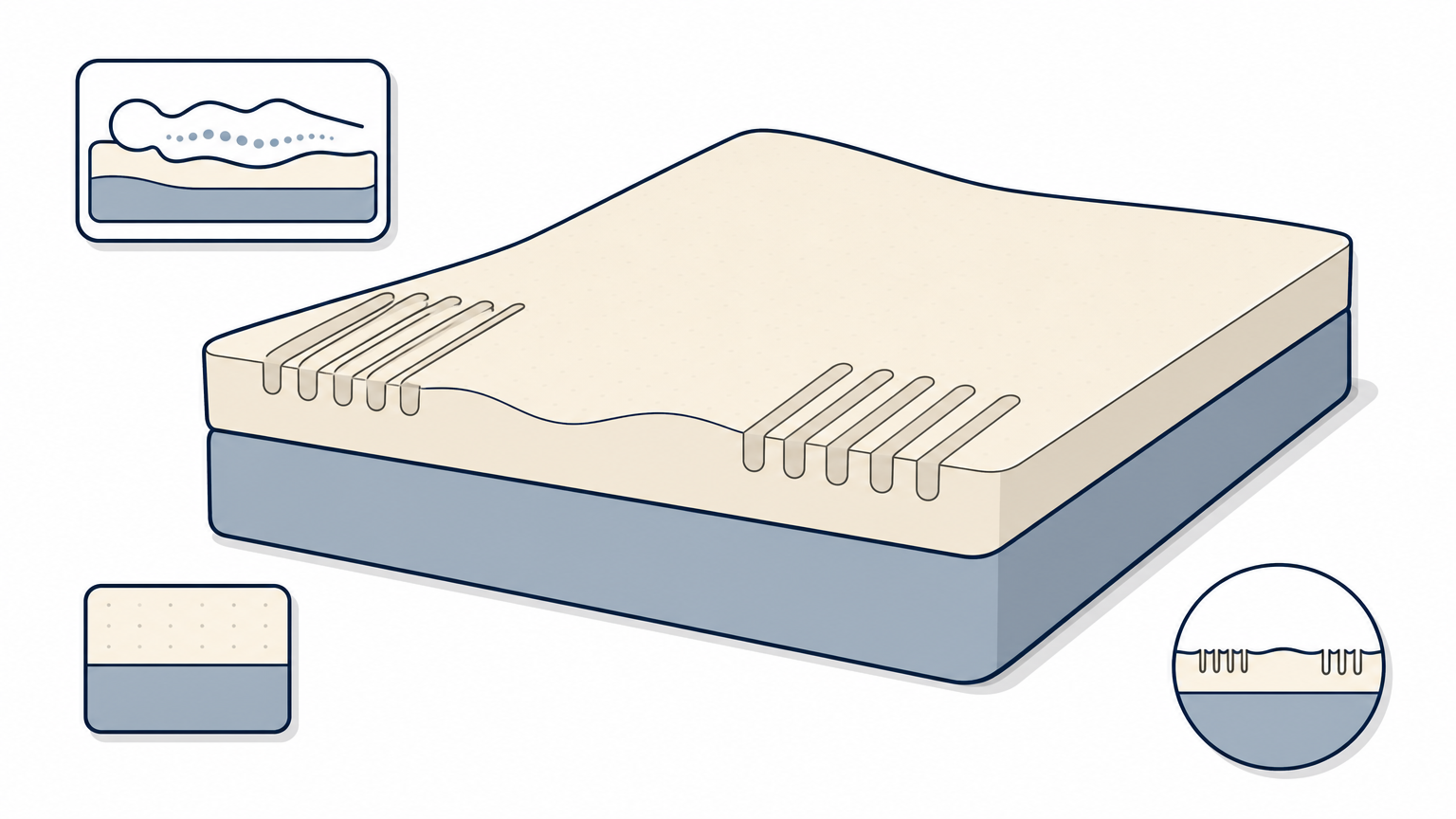
The high-density pressure redistribution foam mattress steps up the support you get from a standard foam core by using multiple layers of varying densities, often finished with a convoluted or zoned top layer. This is the mattress most occupational therapists point to when a patient spends more than 12 hours a day in bed, since it actively works to reduce the pressure points that cause skin breakdown.
How it works
Rather than one uniform slab, this foam mattress hospital bed design layers a firmer base (2.5 to 3.5 lb/cubic ft) under a softer, contouring top layer that molds to the body's shape. Some models add cut-out zones at the heels and sacrum, the two spots where pressure sores develop fastest. The higher density base keeps the person from bottoming out against the frame's deck panels, while the softer top layer spreads weight over a wider surface area.
If your loved one is bed-bound most of the day, pressure redistribution foam isn't a luxury upgrade, it's the difference between healthy skin and a hospital readmission.
Who it's for
This option suits anyone at moderate to high risk for pressure ulcers, including people recovering from a stroke at home, spinal cord injury, or advanced age-related immobility. Caregivers managing long-term home care should treat this as the practical best hospital bed mattress choice over standard foam.
Price range
Expect $400 to $900, depending on zoning and cover quality. Compare foam versus air mattress surfaces in our full lineup to find options matched to your frame.
3. Innerspring hospital bed mattress
The innerspring hospital bed mattress brings a familiar residential mattress feel to a medical frame, using a coil support system instead of solid foam. It's less common in clinical settings these days, but some families still request it because it feels closer to a normal mattress and offers more bounce for someone who repositions themselves easily.
How it works
Coils inside this mattress hospital bed design compress independently under body weight, so the mattress responds to movement rather than staying rigid like foam. A foam or fiber comfort layer sits above the coils, and a fluid-resistant cover wraps the whole unit. The catch is flexibility at the joints. Coils don't bend as cleanly as foam when you raise the head or knee section, so cheaper innerspring models can develop a stiff ridge right at the articulation points over time.
Innerspring feels the most like a regular mattress, but it's the option least suited to frequent head or knee articulation.
Who it's for
This pick works best for people who spend limited time with the bed adjusted, mostly sleeping flat and sitting up briefly for meals or visits. It suits caregivers prioritizing comfort and a familiar feel over maximum pressure redistribution, particularly for lower-risk patients without skin breakdown concerns. Skip it if your loved one needs frequent head elevation for reflux, breathing issues, or feeding.
Price range
Innerspring hospital bed mattresses typically run $200 to $500, similar to standard foam but with wider variation based on coil count and comfort layer thickness. If you're weighing this against foam, our team at SlumberSource can walk you through which construction fits your specific frame and care plan.
4. Alternating pressure and low air loss mattress
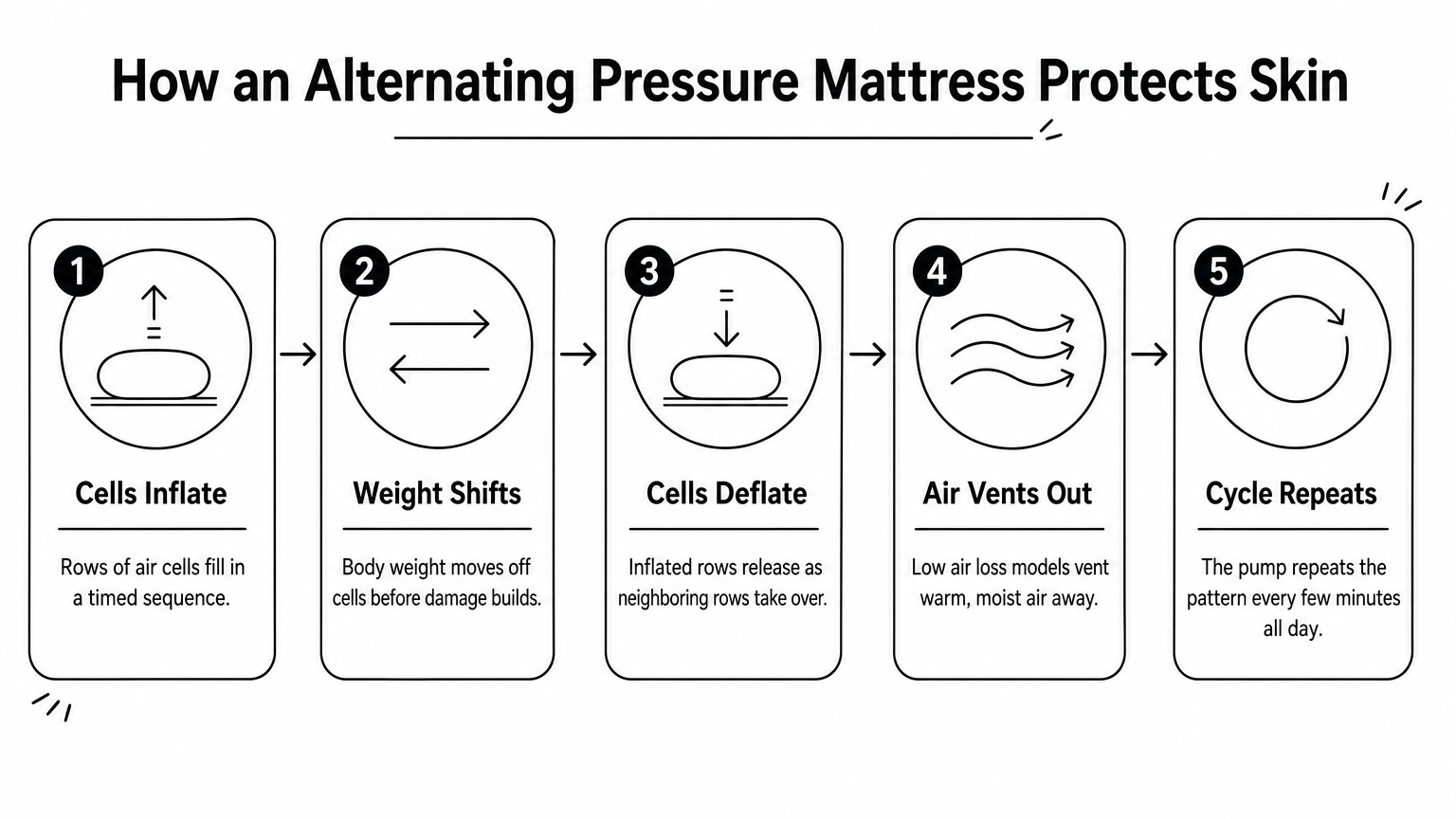
The alternating pressure and low air loss mattress is a powered system, not a passive foam block, built for people at high risk of pressure sores or already living with one. Air-filled cells cycle inflation and deflation on a timed loop, constantly shifting where the body bears weight, while some models add a low air loss function that pushes a gentle airflow through the surface to manage moisture and skin temperature.
How it works
Inside this mattress, rows of connected air cells attach to a small electric pump that inflates alternating rows every few minutes. Weight never rests on the same cells for long, which interrupts the sustained pressure that causes tissue damage. Low air loss versions add micro-perforations that vent warm, moist air away from the skin, useful for anyone prone to sweating or existing wounds.
When pressure sores are already a concern, a passive foam mattress isn't enough, you need a powered surface that actively moves pressure away from at-risk skin.
Who it's for
This option suits people with Stage 2 or higher pressure ulcers, limited ability to reposition themselves, or conditions like advanced dementia or paralysis that keep them in one spot for most of the day. Hospice and end-of-life caregivers often choose this system for its wound-management benefits.
Price range
Expect $600 to $1,800, depending on cell configuration and whether low air loss is included. The pump itself adds ongoing electricity use, so factor that into your budget.
5. Bariatric hospital bed mattress
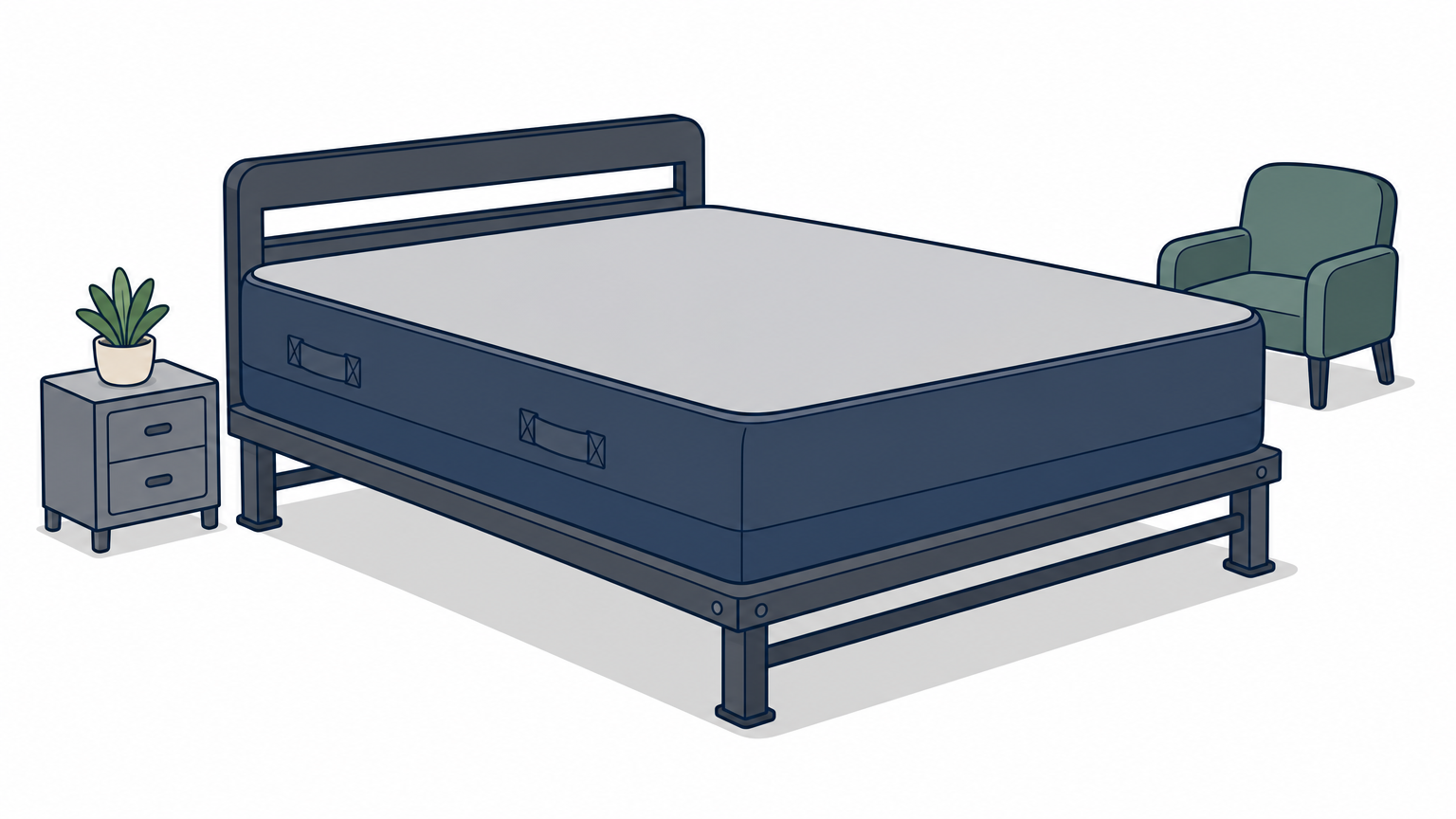
The bariatric hospital bed mattress is built wider and denser than a standard unit, designed to support higher body weights without bottoming out or breaking down at the seams. Most standard foam or innerspring mattresses top out around 350 pounds of rated capacity, and pushing past that limit compresses the foam permanently within months, leaving a body-shaped dip that undermines pressure redistribution entirely.
How it works
Manufacturers reinforce this mattress for hospital bed use with a firmer, higher-density foam core, often 3.0 lb/cubic ft or above, paired with reinforced side seams and a heavier-gauge waterproof cover that resists tearing under sustained load. Weight capacities usually range from 500 to 1,000 pounds, and the mattress itself is often sized wider, 42 to 48 inches, to match bariatric-rated bed frames.
A standard-capacity mattress under a bariatric patient isn't just uncomfortable, it fails structurally within weeks and stops protecting the skin altogether.
Who it's for
This pick is for caregivers supporting a loved one above 300 pounds, regardless of mobility level. It matters most when paired with a bariatric-rated adjustable frame, since the mattress and frame need matching weight ratings to function safely together during transfers and articulation.
Price range
Bariatric mattresses run $500 to $1,200, with price climbing alongside weight capacity and cover durability. Check our heavy-duty beds rated 500 to 1,000 lb to confirm the mattress you're considering actually matches your frame's rated capacity before you buy.
6. Memory foam and gel-infused hospital bed mattress
The memory foam and gel-infused hospital bed mattress brings the slow-contour feel of a residential memory foam mattress to a medical frame, often with cooling gel beads or a gel layer mixed into the foam. It's the closest thing to a furniture-grade sleep surface you'll find in this category, which makes it popular with families who want clinical support without the hospital look or feel.
How it works
Viscoelastic foam in this hospital bed foam mattress softens with body heat and slowly molds around the shape of the person lying on it, spreading weight over a wider area than firmer foam types. Gel infusion counters memory foam's biggest home-care drawback: heat retention. Standard memory foam traps warmth against the skin, which raises sweating and skin breakdown risk for anyone lying in one position for hours. Gel beads or a gel layer pull that heat away and keep the surface cooler through the night.
Memory foam contours to the body better than any other option here, but skip the gel layer and you trade pressure relief for overheated, irritated skin.
Who it's for
This option suits caregivers whose loved one is mobile enough to reposition but sensitive to firmer surfaces, plus anyone managing thin, fragile skin common in elderly patients. It's also a strong fit for families who plan to keep the bed in a main living space and want it to look and feel like a normal mattress, the same reason many compare furniture-grade luxury hi-low beds.
Price range
Expect $350 to $800, with gel-infused, higher-density models landing at the top of that range.
Choosing the right mattress for your needs
Matching the mattress to the person, not just the bed frame, is what actually prevents skin breakdown and sleepless nights. A mobile, low-risk person does fine on standard foam. Someone bed-bound most of the day needs pressure redistribution or a powered air system. Bariatric needs demand a mattress rated for the weight, not just the frame. And if comfort and appearance matter as much as function, gel-infused memory foam closes that gap without sacrificing support.
Don't guess your way through this purchase. The right hospital bed mattress depends on mobility level, skin condition, and how often the bed gets adjusted throughout the day, factors that change from one caregiving situation to the next. If you're still weighing options, or need a mattress matched precisely to a specific adjustable frame, see the hospital beds we deliver and install for home use and talk to the SlumberSource team before you buy. We'll help you land on the setup that actually fits your loved one's needs, not just their budget.


