

Bed Rail Assist Bar: 4 Top Picks for Seniors at Home
By the SlumberSource team. Published: October 2026.
A good bed rail assist bar does three things. It anchors firmly to the bed, sits at a height the user can grip without stretching, and stays put when someone leans their full weight on it. For most people, an adjustable rail that slides under the mattress is the best all-around pick. A strap-on bed cane suits light support on a tight budget. A folding rail suits caregivers who need open access. A hospital bed with built-in rails suits people who have outgrown any add-on.
The problem is that these products look alike online and behave very differently in a bedroom. A bar that shifts on a soft mattress, or leaves a gap beside it, can cause the fall it was meant to prevent. Prices run from about $35 to $150 for add-on rails, so a wrong guess is annoying but not ruinous. A wrong fit is the real risk.
This guide covers four types of bed assist bar and rail, then walks through safety checks, Medicare, and how to buy locally. Slumbersource sells home hospital beds and adjustable beds, so rail questions come up constantly, and we know where each option works and where it stops.
1. Adjustable rail that slides under the mattress
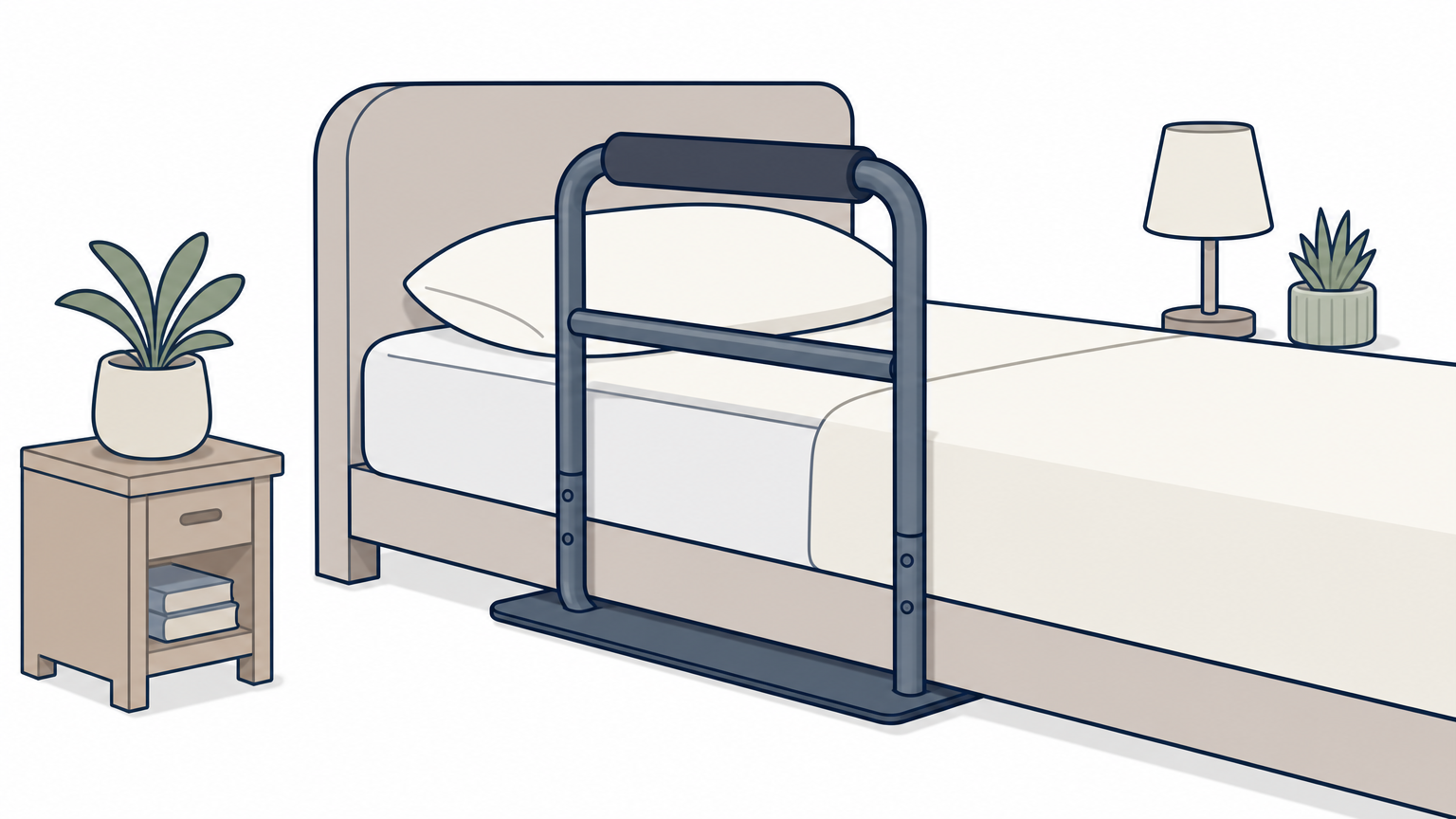
The best all-around pick is a steel rail whose base slides between the mattress and box spring and whose handle adjusts in height. It fits most standard home beds and gives a firm grip for sitting up, rolling over, and standing.
How it works
The base sits under the mattress, so the sleeper's own weight holds the rail in place. You set the handle height to match the mattress, which keeps the grip at a natural reach for pushing up. Many models add a pocket for glasses or a phone.
A slide-under rail is only as steady as the mattress weight pressing on its base.
Who it suits
- Adults who can stand with a handhold but struggle to push up from lying down.
- Standard twin, full, queen, and king beds with a mattress heavy enough to pin the base.
- Households that want one rail that can move to another bed later.
Price and where to buy
Well-known adjustable models run roughly $115 to $145. Medical supply stores, pharmacies with a home health section, and online retailers all carry them. Measure your mattress thickness first and compare it with the listed adjustment range.
2. Strap-on bed cane with an M-shaped handle
The cheapest useful bed rail assist bar is the bed cane, a compact M-shaped or looped handle that straps to the bed frame or tucks under the mattress. It gives one dependable grab point without crowding the bed.
How it works
A short steel handle rises from a base plate under the mattress, and straps wrap the frame to stop it from sliding. The M shape gives two grip heights, so the user can pull up with one hand, then walk the other hand higher. Most include a soft foam grip and a side pocket.
A bed cane gives you a handle to pull on, not a wall to lean on.
Who it suits
- Someone with mild balance or strength problems who needs a boost, not a barrier.
- Travelers and second beds, since canes are light and easy to move.
- Budget-conscious families testing whether a rail helps before spending more.
Price and where to buy
Basic canes start around $35, and models with organizer pouches climb toward $115. They are the easiest type to find near you, since most medical supply counters and big-box stores stock at least one. Confirm the weight rating before you buy.
3. Foldable metal safety rail
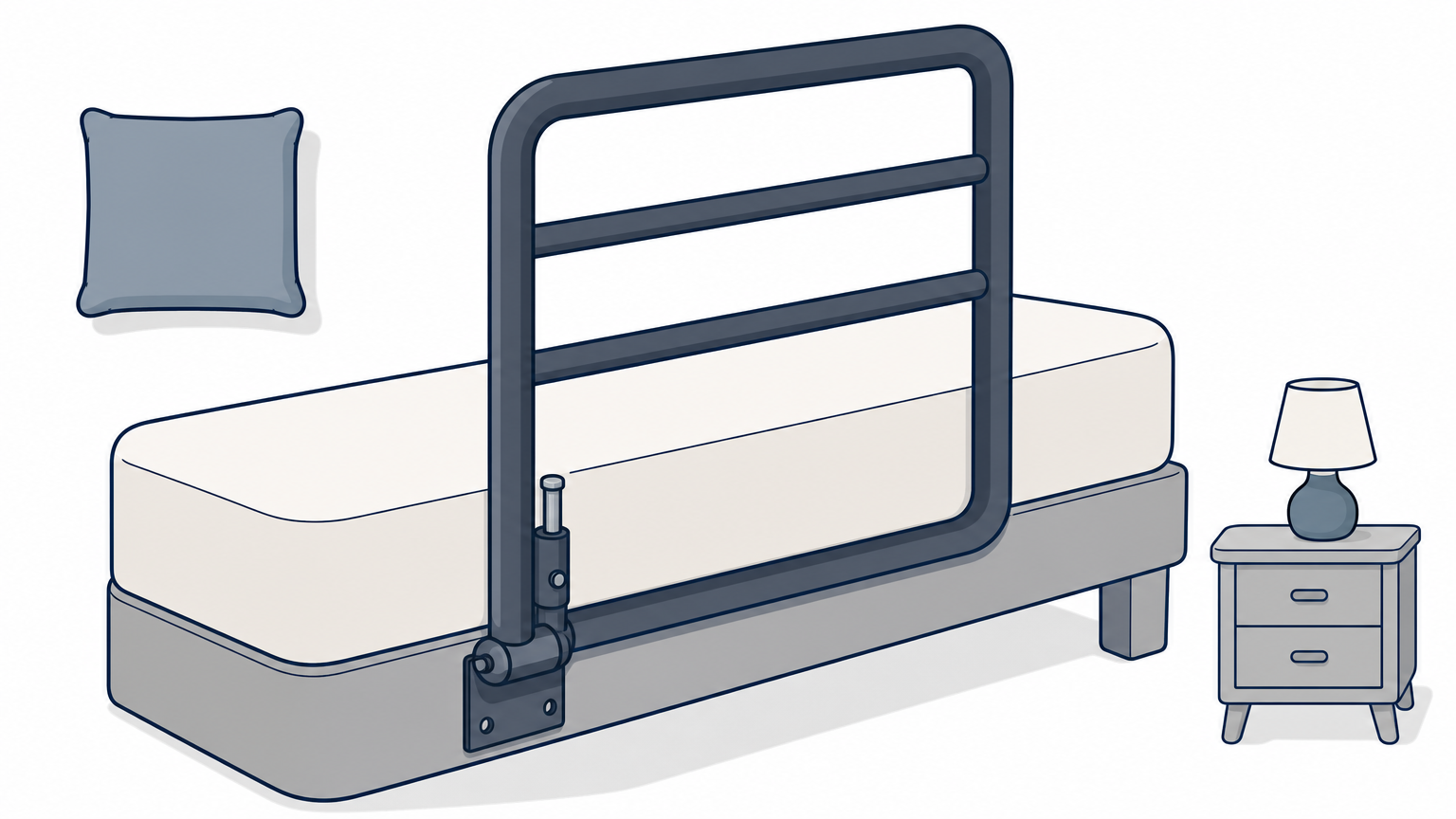
A foldable rail is the right bed rail assist bar when a caregiver needs to reach the sleeper. It stands up for support at night and folds down for transfers, dressing, and changing sheets.
How it works
A hinged steel frame locks upright and releases to fold flat against the mattress. It anchors under the mattress like a slide-under rail, but the hinge adds a fold-down position that clears the edge of the bed. Test the lock by hand. A rail that folds under pressure is worse than none.
Folding access only helps if the locked-upright position never gives.
Who it suits
- Caregivers who help with dressing, bathing transfers, or repositioning.
- People who use a rail some nights but want a clear bedside during the day.
- Anyone who wants a longer rail to stop rolling out of bed, as well as a handhold.
Price and where to buy
Expect about $145 for a reputable folding model. Online retailers ship quickly, but a local medical supplier lets you test the lock and fold in person. Ask about return terms before you commit.
4. Hospital bed with built-in rails
When a clip-on bar is not enough, a hospital bed with integrated rails is the step up. The rails belong to the bed, so there is no mattress slippage to worry about and no add-on to second-guess.
How it works
Home hospital beds are engineered as one system, with the frame, mattress platform, and rails sized to work together. That layout helps avoid the gaps that make add-on rails risky. Many also raise, lower, and tilt at the push of a button, which turns a bed rail assist bar into one part of a complete transfer setup. Slumbersource carries clinical-grade and furniture-style hospital beds, including rotating sleep-to-stand models for safe, independent transfers.
If a person needs more than a handhold, fix the bed, not just the bar.
Who it suits
- People who need repositioning, head elevation, or full-height adjustment.
- Families whose loved one has outgrown a cane or slide-under rail.
- Caregivers who want transfers to need less lifting.
Price and where to buy
Home hospital bed prices generally run $2,000 to $8,000+. Slumbersource delivers and installs nationwide in 3 to 8 days, and phone support is available if you want to talk through rail options before ordering.
How to choose and where to buy near you
Choose by how much support the person needs, then confirm the fit with the actual mattress. Buy where you can return it. Here is how the four options compare.
The four options side by side
| Type | Anchoring | Rough price | Best for |
|---|---|---|---|
| Slide-under adjustable rail | Mattress weight | $115 to $145 | Most home beds |
| Strap-on bed cane | Straps and base plate | $35 to $115 | Light support |
| Foldable safety rail | Mattress weight plus lock | About $145 | Caregiver access |
| Hospital bed with rails | Built into frame | $2,000 to $8,000+ | Higher care needs |
Safety checks before you buy
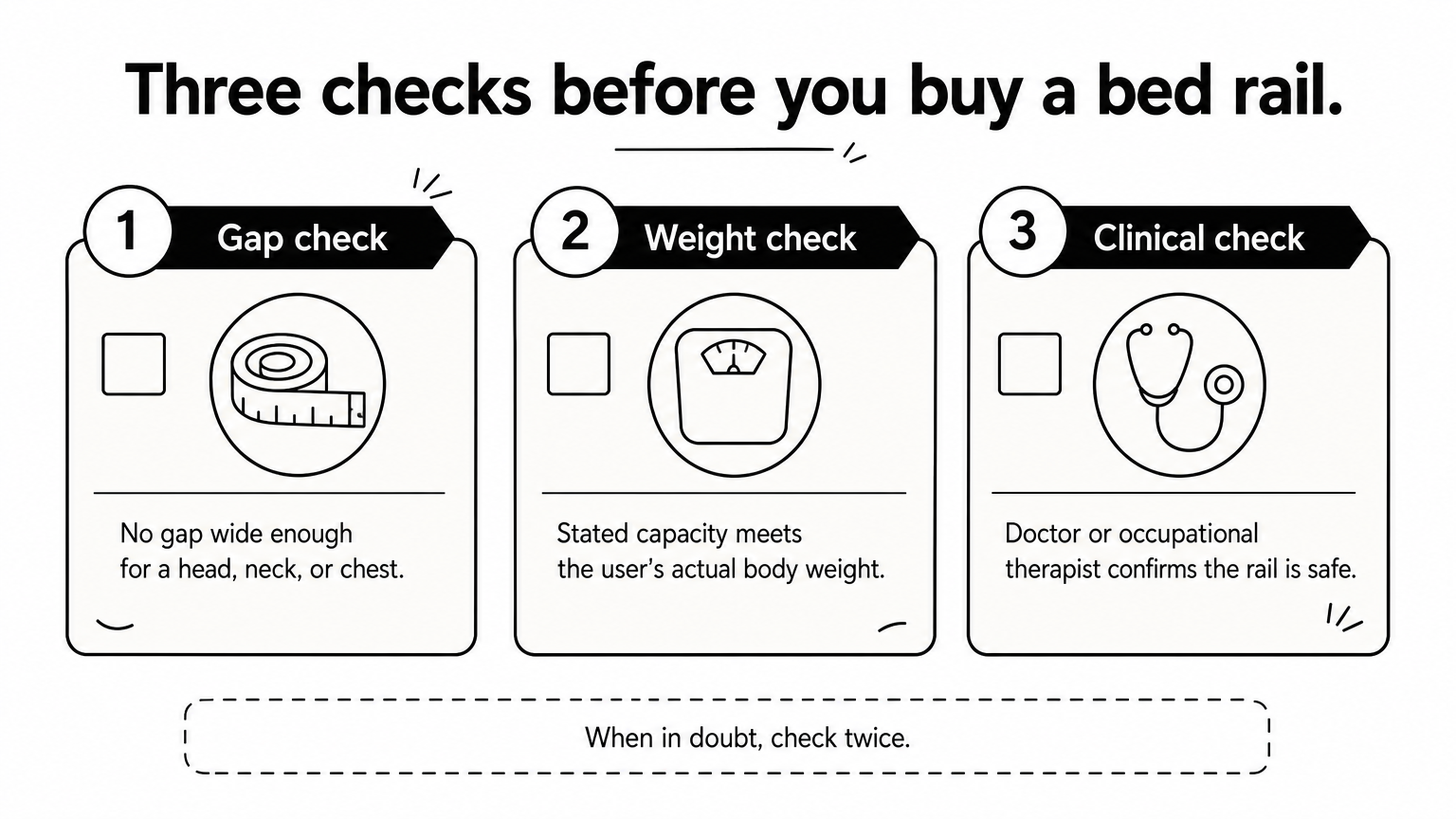
The FDA has documented injuries and deaths from bed rail entrapment, usually when a head, neck, or chest is caught in a gap between rail and mattress. Check that no gap is wide enough for a body to slip into. Confirm the stated weight capacity against the user's weight. Ask the person's doctor or occupational therapist whether a rail is safe, especially with dementia or restlessness at night.
Does Medicare cover bed assist rails?
Usually not for stand-alone bars. Original Medicare may cover a hospital bed as durable medical equipment when a doctor orders it as medically necessary, and rails that come with the bed are typically part of that order. Add-on canes are generally treated as convenience items. Check with your plan and supplier first, and ask whether a rail is FSA or HSA eligible.
Where to buy near you
For a bed assist rail near you, start with local medical supply stores and pharmacies with a home health section. Call ahead, because stock varies, and ask to test the rail on a mattress like yours. Online retailers offer wider selection and faster comparison, so match the mattress thickness to the listing before you order.
Pick the rail, then check the fit
The best bed rail assist bar is the one that fits your mattress, matches the person's strength, and passes the gap and weight checks above. Start with a slide-under adjustable rail for most beds. Choose a cane for light, low-cost help, and a folding rail when a caregiver needs access.
If you are comparing rails because getting in and out of bed is becoming unsafe, a rail alone may not be enough. In that case, browse home hospital beds at Slumbersource and see which bed fits your loved one and your home.


