

Hospital Bed Size Mattress: Does Twin or Twin XL Fit?
By the SlumberSource team. Published: October 2026.
A hospital bed size mattress is a mattress cut to fit the sleep deck of an adjustable hospital bed. The standard size is 36 inches wide by 80 inches long, usually 6 to 7 inches thick. That is close to a twin XL, which measures about 38 by 80 inches, but close is not a fit. A twin XL mattress is roughly 2 inches too wide for a standard hospital bed deck, and a regular twin is 5 inches too short.
This guide explains why the fit matters, how to measure your bed and choose the right size, and what happens when you put a twin or twin XL mattress on a hospital frame. It also covers which mattress types come in hospital sizes and how to match sheets and covers. You will know exactly what to order when you finish.
Slumbersource sells hospital beds and adjustable beds for home use, so mattress sizing is one of the first questions families ask us. The answer depends on the bed you buy. The sections below show you how to confirm it before you spend a dollar.
Why hospital bed mattress size matters
The right hospital bed size mattress keeps the sleeper safe, lets the bed move as designed, and spares you a costly return. Size is not a comfort detail here. It is part of how the bed works.
A poor fit creates safety gaps
A mattress that is too small leaves gaps between the surface and the side rails, headboard, or footboard. A limb or body can slip into those gaps, and the FDA has published guidance on this entrapment risk for hospital bed systems. A mattress that is too wide has the opposite problem. It rides up against the rails, bows in the middle, and pushes the rails out of position.
Thickness matters just as much. Rails are built around a mattress of about 6 to 7 inches. A thick residential mattress sits higher and cuts the effective rail height, so a restless or confused sleeper can roll over the top more easily. For anyone at risk of falling, that single measurement can undo the point of having rails.
A mattress that is off by two inches is off every night, at every angle of the bed.
Size decides how the bed adjusts
Hospital bed decks bend at the head, hip, and knee. The mattress has to bend at the same points, and that only happens when its length matches the deck and its core is built to flex. A standard residential mattress resists the fold. Here is what that looks like in daily use:
- Sheets bunch under the hips at the knee break.
- The sleeper slides toward the foot end when the head section rises.
- The mattress lifts away from the deck when sections move.
- Coil or foam edges pinch where the deck folds.
Bunched fabric and sliding also add pressure and friction at the hips, tailbone, and heels. Those are the places where pressure sores tend to start. A properly sized hospital bed mattress removes most of that risk before you ever pick a mattress type.
The price of guessing wrong
Mattresses are bulky and awkward to ship back, and many sellers limit returns on bedding for hygiene reasons. A wrong guess can mean paying twice. Measure the deck before you order, even if the bed is described as standard, because extended-length and wide models are common.
Sheets and covers carry the same risk. Linens made for a different size end up loose or tight, and both cause problems on an adjustable frame. Getting the mattress right first makes every other purchase easier.
How to choose the right hospital bed mattress size
Match the mattress to the deck of your bed, not to a size you remember from a furniture store. Start with the frame's listed dimensions, confirm them with a tape measure, then choose thickness and construction.
What size mattress is a hospital bed?
A standard hospital bed takes a 36 by 80 inch mattress that is 6 to 7 inches thick. Many people call this a twin XL size, but it is about 2 inches narrower than a true twin XL. Other bed types use other hospital bed dimensions, and brands vary by an inch or two, so treat the table as a guide and the manufacturer's spec as the final word.
| Bed type | Typical mattress size | Notes |
|---|---|---|
| Standard adult | 36" x 80" | The most common home hospital bed |
| Extended length | 36" x 84" to 88" | For tall users, often through an extension kit |
| Wide | 39", 42", or 48" wide, 80" to 84" long | For extra turning room |
| Bariatric | Up to about 54" wide, 80" to 94" long | Higher weight capacity, some models wider |
| Pediatric | 30" to 33" wide, 62" to 72" long | Sized for growing children |
Length deserves a second look. A user taller than about 6 feet can have heels pressing against the footboard on an 80-inch mattress. An 84-inch mattress gives 4 extra inches and keeps the feet clear, which helps protect the heels from pressure.
How to measure your bed deck
Measure the sleeping deck, not the outside of the frame. Follow these steps with the bed flat and the mattress removed:
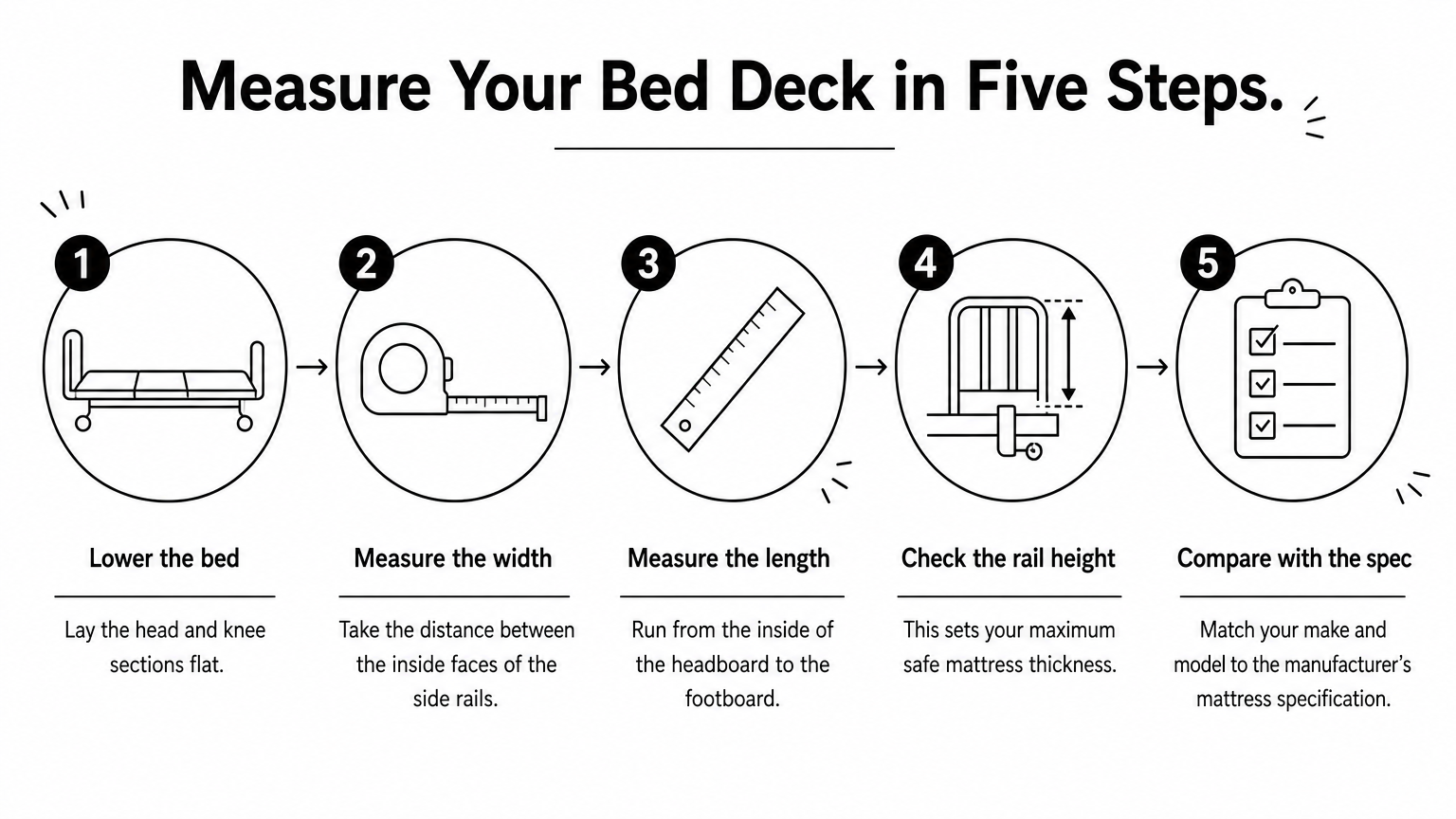
- Lower the bed and lay the head and knee sections flat.
- Measure the deck width between the inside faces of the side rails.
- Measure the length from the inside of the headboard to the inside of the footboard.
- Measure the rail height above the deck. This sets your maximum safe mattress thickness.
- Note the bed's make and model, then compare your numbers with the manufacturer's mattress specification.
If you are shopping for a new bed, use a bed and mattress size calculator or read the deck size on the product page before you read anything else. Buy the bed and mattress as a matched pair whenever you can, and write the deck dimensions down so you can reuse them for sheets later.
Choose thickness and weight capacity
Stay with the thickness the manufacturer lists, which is usually 6 to 7 inches, and ignore the idea that thicker means better. A taller mattress can leave a small gap near the knee break and can reduce the useful height of the rails. Pressure relief comes from the mattress design, not from added inches.
Weight capacity is the other number to check. A hospital bed mattress has its own rated limit, and one popular innerspring model lists 350 pounds. The bed frame has a separate limit. The lower of the two sets your ceiling, so confirm both, and move to a wide or bariatric mattress if the user is near either figure.
Pick the mattress that matches the deck's size and the rails' height, then upgrade the surface, not the thickness.
Twin and twin XL mattresses on a hospital bed
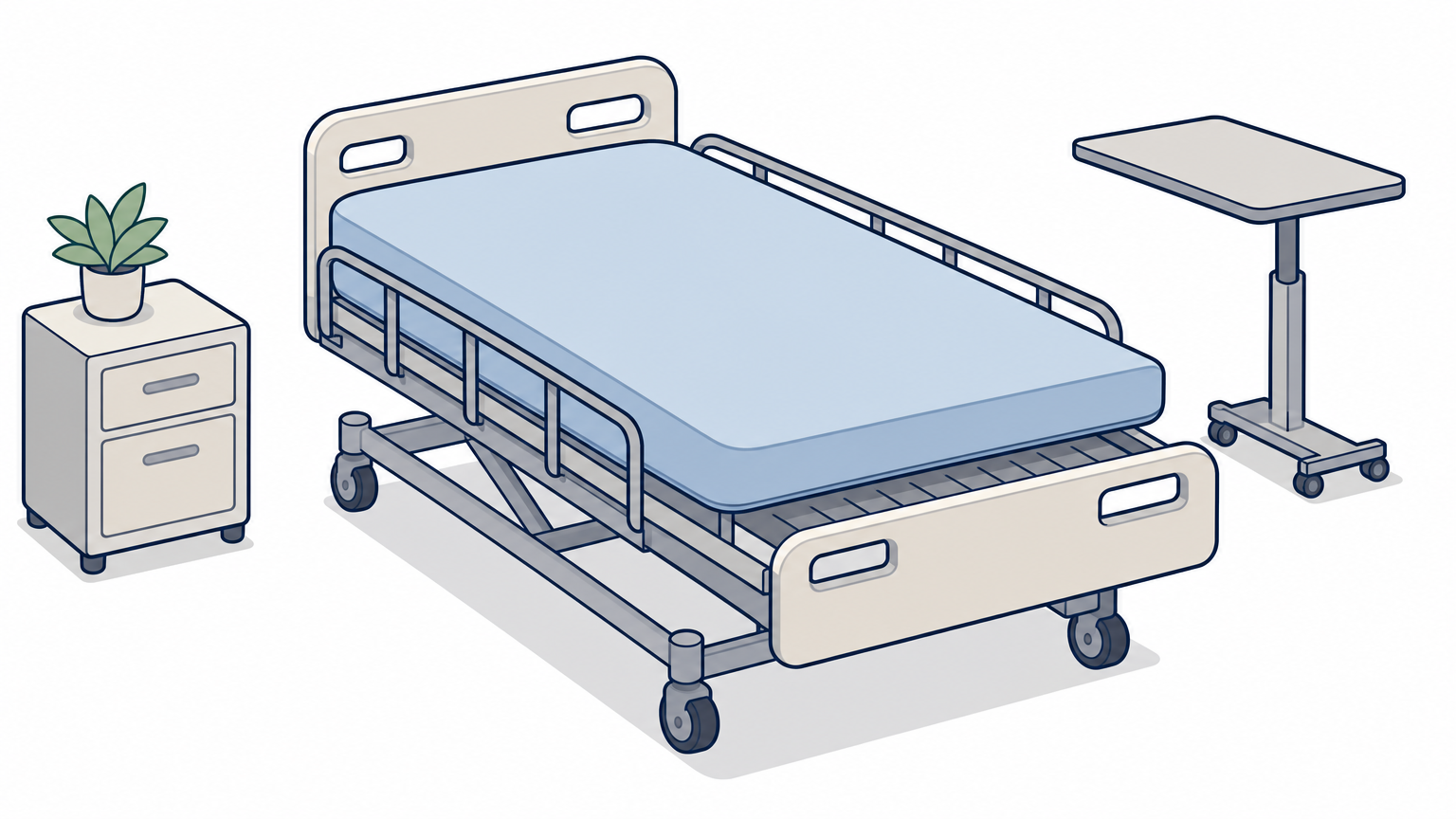
Neither a twin nor a twin XL mattress is a reliable fit for a standard hospital bed. Twin XL comes closest, and it is still wrong in width, thickness, and flexibility. A hospital bed size mattress is a different product, even when the label sounds similar.
The numbers side by side
Here are the common sizes next to each other. Residential thickness varies widely by brand, so the thickness column shows typical ranges.
| Mattress | Width | Length | Typical thickness | Fit on a 36" x 80" hospital deck |
|---|---|---|---|---|
| Hospital bed mattress | 36" | 80" | 6" to 7" | Made for it |
| Twin XL | 38" | 80" | 8" to 14" | 2" too wide, too thick |
| Twin | 38" | 75" | 8" to 14" | 2" too wide, 5" too short |
| Full | 54" | 75" | 8" to 14" | Does not fit |
The length of a twin XL matches the hospital bed. That is why so many people assume it works. The width and thickness are where the fit breaks down.
Why a twin XL mattress for a hospital bed falls short
A twin XL hospital bed mattress would have to squeeze into a deck 2 inches narrower than itself. The edges curl up against the rails, the surface crowns, and the sleeper rolls toward the edges. The extra thickness raises the sleeping surface and lowers the rails' protective height.
Flexibility is the bigger issue. Residential mattresses are not built to fold at the knee and hip. Instead of bending with the deck, a twin XL tends to buckle, lift, or slide down the frame when the head rises. Twin XL sheets run about 2 inches wider than the deck too, which means loose corners under the hips.
Twin mattress for a hospital bed at home
A twin mattress on a hospital bed is the weaker choice. At 75 inches, it falls 5 inches short of the deck, so a gap opens at the head or foot and the mattress shifts every time the bed moves. The mattress also overhangs the sides by about an inch on each side, which brings back the rail and thickness problems described above.
There is one narrow exception. A few wider-deck models list a twin XL-sized mattress as compatible. If the manufacturer states that in writing, follow it. Otherwise buy the mattress made for the deck, especially for anyone at risk of falls.
Same length is not the same fit: a twin XL matches the bed's length and misses on everything else.
Hospital bed mattress types in standard sizes
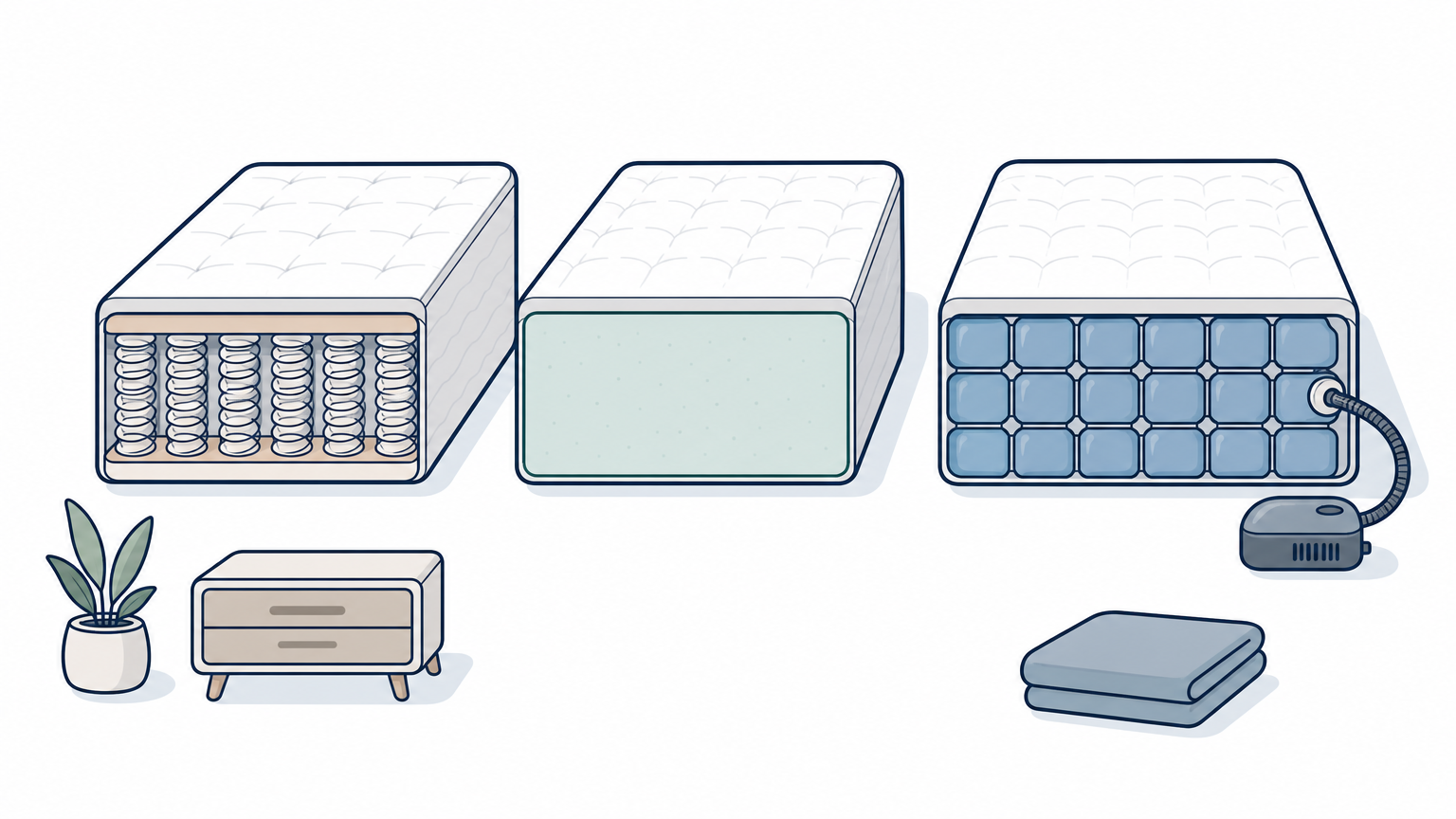
All four main hospital bed mattress types come in the standard 36 by 80 size, so size does not limit your options. Your choice depends on how much time the user spends in bed and how high the skin risk is.
Four types compared
Prices below are common retail ranges. They shift by brand and size, so treat them as ballpark figures.
| Type | Best for | Trade-off | Common price range |
|---|---|---|---|
| Innerspring | People who move in and out of bed often, tighter budgets | Little pressure redistribution | About $130 to $300 |
| Foam | Back support and pressure injury prevention | Less airflow, can sleep warm | About $175 to $540 |
| Low air loss | Moisture control and existing pressure sores | Needs power, pump noise | About $300 to several thousand |
| Alternating pressure | Bedbound users who cannot reposition | Needs power, pump noise | About $300 to several thousand |
Innerspring models use evenly spaced coils and breathe well. Foam surfaces absorb motion and spread weight, and layered versions add zoned support. The two powered types use air cells that either vent air or inflate in sequence to shift pressure points.
How to pick the type
Think about two questions. How many hours a day does the user spend in bed, and can they change position alone? Someone who gets up several times a day can usually do well on a quality innerspring or foam mattress. Someone who is in bed most of the day, or who cannot reposition, needs better pressure redistribution.
Powered air mattresses need constant electricity and a pump that makes some noise, so plan for outlets and light sleepers. If the user already has a pressure injury or a high risk of one, ask a doctor, nurse, or occupational therapist which surface to use. The size stays the same, but the clinical stakes go up.
Fix the size first, then choose the surface by skin risk and time spent in bed.
Sheets, covers, and replacing your mattress
Use fitted sheets and covers made for hospital beds, and replace the mattress when the cover fails or the surface stops supporting. Both choices protect the fit you worked to get right.
Sheets and covers that fit
Hospital fitted sheets are sized for a 36 by 80 inch deck with pockets that handle 6 to 7 inches of depth. A twin XL sheet is cut wider and deeper, so it tends to hang loose at the corners, and a twin sheet is 5 inches too short. Either one can bunch under the hips every time the bed adjusts.
Test any sheet the same way. Raise the head section, raise the knee section, lower the bed, and return it flat. Corners that stay tucked through several cycles are a good sign. Fluid-resistant covers help with hygiene, and they need the same exact fit, since a loose cover can wrinkle like a loose sheet.
When to replace the mattress
Hospital mattresses commonly last around 8 to 10 years, and heavy daily use shortens that. Look for these signs:
- A permanent indent or sag where the user lies
- Cracks, tears, or leaks in the cover
- Odors that remain after cleaning
- Coils or foam edges you can feel through the surface
- New redness at the hips, tailbone, or heels
A damaged cover is the most urgent. It lets fluid into the core and makes the mattress impossible to clean properly. Measure your deck again before you reorder, because a new mattress is a fresh chance to confirm the hospital bed size mattress you need.
Replace the mattress when the cover fails, not when the foam looks fine.
Getting the fit right before you buy
A standard hospital bed takes a 36 by 80 inch mattress, 6 to 7 inches thick. A twin XL is 2 inches too wide, too thick, and not built to flex, and a twin is too short. Measure the deck, check the rail height, and match the manufacturer's spec before you order.
Once the size is settled, choose the surface by skin risk and the sheets by deck size. If you are still choosing the bed itself, you can browse hospital beds and adjustable beds at Slumbersource and check the deck dimensions on each one.


