

5 Best Gel Overlay Mattresses for a Hospital Bed at Home
When someone you care for spends most of the day in bed, pressure builds fast at the hips, tailbone, and heels. A standard hospital bed mattress often is not enough on its own. A gel overlay mattress for hospital bed use adds a cooling, pressure-spreading layer on top, which helps lower the risk of bedsores and makes long hours in bed more comfortable.
If you want the short answer, choose an overlay that matches your bed's exact size (most home hospital beds are 36 by 80 inches) and has a non-slip, waterproof cover. Look for a gel layer at least 2 inches thick, and check that it stays flat when the head or foot of the bed is raised. A gel mattress topper for a hospital bed should never bunch or slide.
Below, you will find five options we rate highest, with sizes, key features, approximate prices, and who each suits best. At SlumberSource, we supply hospital beds for home care, so we know which toppers work well with adjustable frames. Skim the list, then pick the one that fits your situation.
1. Drive Medical Premium Guard Gel Foam Overlay
How it's built
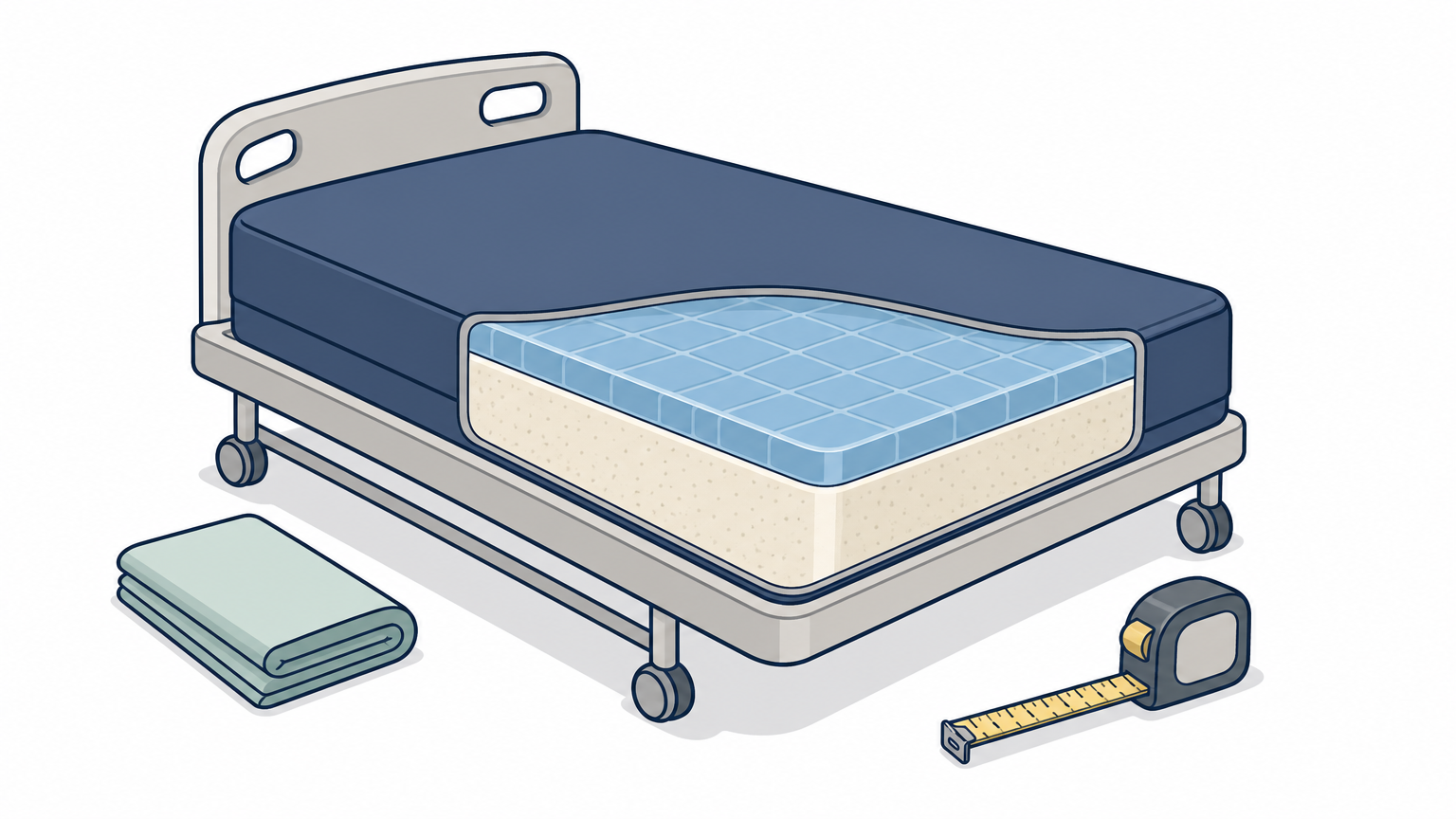
This overlay layers gel-infused foam over a supportive foam base. The gel spreads body weight across a wider area and helps draw heat away from the skin. That matters because warm, damp skin breaks down faster.
The cover is built for daily care:
- Waterproof, wipe-clean surface for spills and incontinence
- Soft, breathable top for long hours in bed
- Foam that flexes when you raise the head or foot of the bed
It works well as a hospital bed gel mattress topper because it adds comfort without adding much height.
Sizes and weight capacity
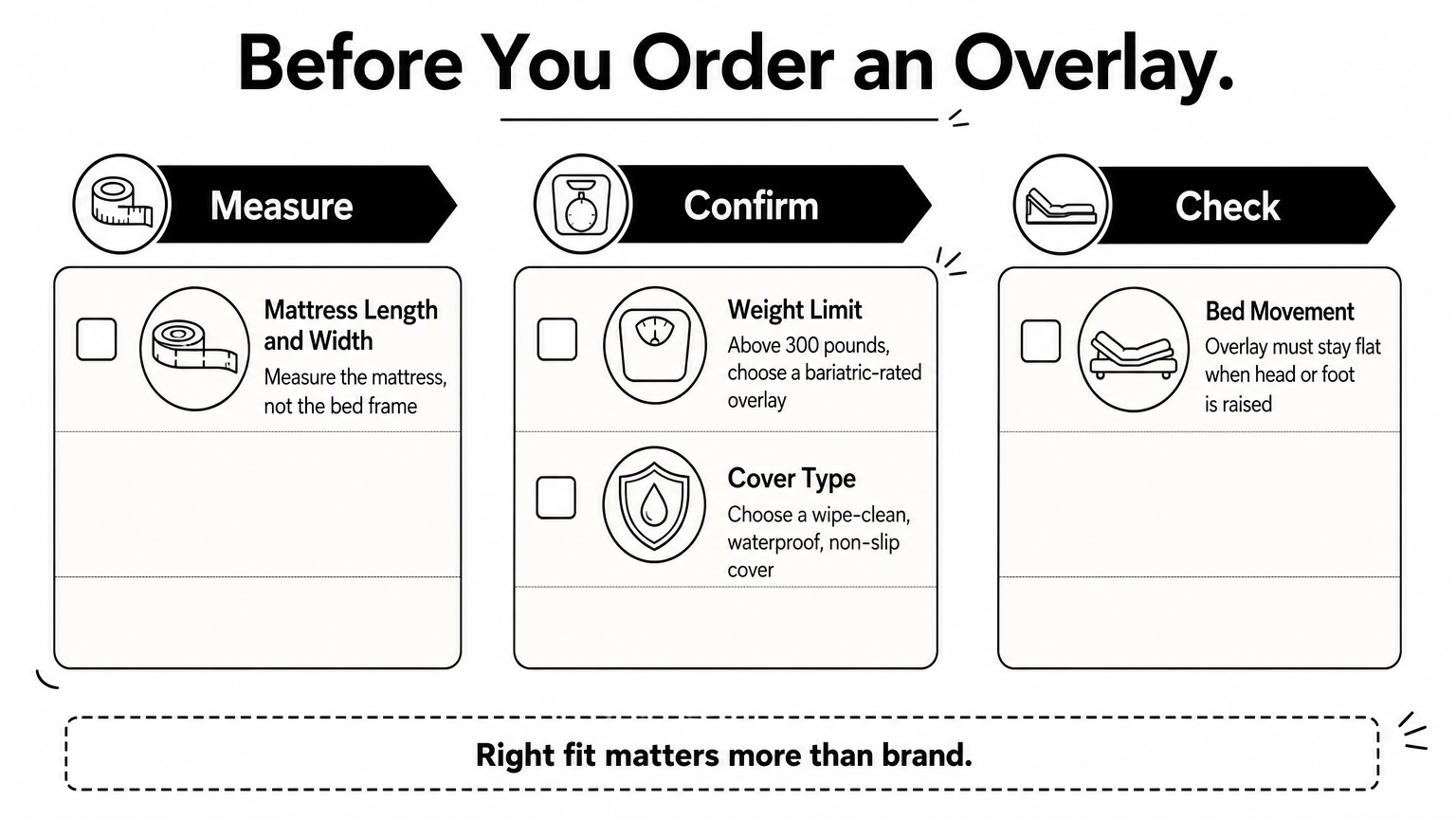
Drive sells this style of overlay in sizes made for standard hospital beds. Measure your mattress length and width, then compare them to the listing. Even a one-inch mismatch lets the edges curl or shift.
Weight ratings for overlays in this class usually land around 300 to 350 pounds. Confirm the stated weight capacity on the product page. For a heavier user, skip this one and look for a bariatric-rated overlay.
Who it's best for
Choose this overlay if your loved one is at low to moderate risk of pressure injuries. It suits someone who spends much of the day in bed but can still shift position with a little help. It also fits families who want an affordable first step before moving to a costly alternating-pressure system.
A gel overlay lowers pressure, but it never replaces turning and repositioning every two hours.
If skin is already red, broken, or painful, talk with a nurse or doctor before relying on any overlay. Stage 2 wounds and worse call for a clinical-grade support surface.
Price range
Expect to pay roughly $60 to $130, depending on size and retailer. That makes it one of the cheaper ways to add pressure relief to a home hospital bed.
Prices change often, so compare a few sellers. Make sure the listing shows the exact size and cover type you need.
2. Medline Gel Foam Overlay
How it's built
Medline supplies hospitals and nursing homes, and this gel foam overlay shows that background. A foam body carries a gel layer that spreads pressure and pulls heat away from the skin. Confirm these details on the listing:
- A strapped or fitted design that holds the overlay in place
- A wipe-clean cover for incontinence care
- Foam that bends with the head and foot sections
Sizes and weight capacity
Most versions suit a standard 36 by 80 inch bed, but some listings run shorter. Check length first. A short overlay leaves the heels bare, and heels are a common bedsore site.
Before you order, read the posted weight limit. Overlays in this class often rate near 300 pounds, so heavier users need a bariatric option.
Who it's best for
Pick this one for a loved one who is mostly in bed after surgery or illness and still has intact skin. It also suits caregivers who want a simple, easy-to-clean gel mattress overlay for hospital bed use without extra setup.
A topper that slides around is worse than no topper at all.
If you see open sores, ask a clinician about a higher-grade surface.
Price range
Budget about $70 to $150, depending on thickness and size.
Medical supply sellers often run sales, so compare two or three before you buy.
3. Protekt Serenity Gel Overlay
How it's built
Serenity pairs a gel layer with a foam base to add a cooler, softer surface over your existing mattress. Spreading weight away from bony spots is what makes a gel overlay mattress for hospital bed use worth the money, especially when skin is still intact.
- Gel layer that spreads pressure and dissipates heat
- Foam that bends with the head and foot sections
- Cover that should be wipe-clean (confirm on the listing)
Sizes and weight capacity
Sizing varies by seller, so verify length and width against your mattress before you order. Most home hospital beds take a 36 by 80 inch overlay.
Measure the mattress, not the bed frame.
Then check the posted weight limit. If your loved one is above 300 pounds, look for a bariatric-rated product instead.
Who it's best for
This overlay suits a person who is in bed most of the day but has no open wounds. It also works for caregivers who want extra comfort for someone with sore hips or a bony tailbone, without paying for a powered system.
If skin is already breaking down, ask a clinician about a higher-grade support surface first.
Price range
Plan on roughly $90 to $180, depending on size and thickness. Prices shift between sellers, so compare two or three listings and confirm the cover type before you check out.
4. Graham Field Lumex foam and gel overlay
How it's built
Lumex is a long-standing home medical brand, and this overlay pairs a foam base with a gel layer to spread pressure across the hips and tailbone. It is a practical gel overlay mattress for hospital bed use if you want a familiar medical supply name.
- Foam body that flexes with the head and foot sections
- Gel layer that helps reduce heat and pressure
- Cover that should be wipe-clean (confirm on the listing)
Sizes and weight capacity
Listings vary by seller, so match length and width to your mattress, not the bed frame. Most home hospital beds take a 36 by 80 inch overlay.
Weight limits differ by model. Read the posted capacity before you order, and pick a bariatric-rated product if your loved one weighs more than 300 pounds.
Who it's best for
Choose this overlay for someone who spends most of the day in bed and has intact skin. It also suits caregivers who want a brand with a clear medical supply history and a simple, no-setup topper.
Pressure relief starts with a correct fit, so measure twice and order once.
If you already see red or broken skin, ask a nurse about a higher-grade support surface first.
Price range
Expect roughly $80 to $160, depending on thickness and size. That puts it in the middle of this list.
Compare two or three sellers and confirm the cover type and dimensions before you check out.
5. GEL 80 gel and foam mattress overlay
How it's built
GEL 80 combines a gel layer with a foam base to create a cooler, softer surface over your current mattress. The gel helps spread weight away from the hips, tailbone, and heels.
- Gel layer that dissipates heat
- Foam body that flexes with the head and foot sections
- Cover that should be wipe-clean (confirm on the listing)
Sizes and weight capacity
Sizing depends on the seller, so measure your mattress and compare it to the listing before you order. Most home hospital beds take a 36 by 80 inch overlay.
Then check the posted weight limit. Overlays like this often top out near 300 pounds, so a heavier user needs a bariatric-rated product.
Who it's best for
Choose this overlay for a loved one who spends long hours in bed and has intact skin. It also suits caregivers who want a straightforward hospital bed gel mattress topper without a pump or power cord.
Check skin every day, because no overlay can protect skin you are not watching.
If you notice red, broken, or painful areas, ask a nurse about a higher-grade support surface before you rely on any topper.
Price range
Plan on roughly $85 to $170, depending on size and thickness. Sellers price this style differently, so compare two or three listings and confirm the cover type and dimensions before you check out.
Choosing the right overlay for your loved one
Any of these five can work, so the right fit matters more than the brand. Measure your mattress, confirm the weight limit, and pick a cover that wipes clean. A gel overlay mattress for hospital bed use is a low-cost way to ease pressure, but it works best alongside regular repositioning and daily skin checks.
If skin is already red or broken, skip the topper and ask a clinician about a higher-grade support surface. Overlays are for prevention and comfort, not for treating wounds.
Sometimes the mattress is only part of the answer. If the bed itself no longer suits your loved one, browse the hospital beds for home use at SlumberSource. You will find clinical-grade and adjustable models that are delivered and installed nationwide in 3 to 8 days, so you can pair the right bed with the right overlay.


